
Profile

My Learning Objects

My Groups

My Events and Job Postings

My Professional Activities

Cassidy Javner
Richfield High School
About
Beyond Benign Roles
- Certified Lead Teacher
Languages
- English
Contributions
Resources that the user is listed as a contributor
| Title | Authors and Co-authors | Published on | |
|---|---|---|---|
| Make It and Break It: Bioplastics from Plant Starch with Incorporation of Engineering Principles | Jane Wissinger, Cassandra Lydon, Cassie Javner | 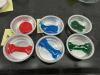
|
No Group Memberships
This user is not currently a member of any groups. A list of current GCTLC groups is available here.
My Job Postings
No published jobs available at this time.
This section displays this user's live job postings. Once they publish a job, it will appear here for others to view.
This section displays this user's live job postings. Once they publish a job, it will appear here for others to view.
My Events
No published events available at this time.
This section displays this user's live event postings. Once they publish an event, it will appear here for others to view.
This section displays this user's live event postings. Once they publish an event, it will appear here for others to view.
Recent Activity
- Cassie Javner was just tagged in a comment: Hello all, I’m currently taking Introduction to Green Chemistry through Beyond Benign. Our recent class discussion centered around how we often use big, flashy demonstrations to capture student attention, like the Barking Dog or Elephant Toothpaste, that violate some of the core principles of laboratory safety. While these demonstrations certainly get the kids excited, it asks us to consider what students actually retain from these presentations. Did students walk away with a new understanding of a foundational principle of chemistry or did they just remember that something exploded in chemistry class that one day? Do we want students entering the field of chemistry thinking that explosions are what they should expect to see on a regular basis? It got me to thinking about how we need to make a shift from WOW to WHOA. Both get the students excited about chemistry but with different outcomes. A WOW demo: -Has students Watch (students are passive spectators)-Acts Outside the lines (pushing safety boundaries for visual impact)-Is Wasteful (generating hazardous waste or uses excessive material) A WHOA demo:-Is Wonder driven (students encounter an observation that invites inquiry)-Is Hands on & Hazard free (students can perform it themselves rather than watch the teacher do it)-Is Optimized (using microscale techniques, renewable resources, or household-safe alternatives_-Is Anchor-based (connects directly to a real world phenomenon) What are some ways you have changed from WOW to WHOA? @Cassie Javner ...
- Cassie Javner was just tagged in a comment: A database with common substances used in high school chemistry labs along with their greener alternatives would be a great similar idea, too! Kind of like a "Use this, not that for this outcome" document in which teachers can quickly check to see if there is a more widely available, greener alternative to something they use in their labs already. Such a thing might already exist, but I would love to have such a document. My school/district doesn't provide much of a budget for chemical supplies, so I often do "grocery store" labs anyway, but I would love to see what chemicals I can eliminate or reduce in my lab. @Cassie Javner ...
- Cassie Javner was just tagged in a comment: Hello Everyone,I am currently taking the Intro to Green Chemistry course from beyond benign and it is terrific. My problem is time. I teach in MA and am having a hard time figuring out how to incorporate these principles while still hitting all the frameworks required by the state. I love the resources I have found in this forum about safer/greener labs and those are relatively easy to incorporate, but how is everyone incorporating the deeper principles of green chemistry and still managing to cover the necessary topics? Thanks for the help.~Celeste @Cassie Javner ...
- Cassie Javner was just tagged in a comment: Hi @Reshmi Joseph and @Cassie Javner! I would love to hear how the integration of real-world cases in chemistry classes has affected students. Moving forward, do you plan to apply this kind of practice across the entire syllabus?I am not used to seeing real-world cases in my undergraduate and even in high school lectures (in the Philippines set-up). However, when I experienced this approach in my graduate programs, it had a much deeper and more personal impact. It made me reflect on my daily choices and how they might lead to broader consequences.With the conventional chemistry syllabus as it is now, I strongly agree with Reshmi that integrating additional real-world case discussions would require extra time and could affect the goal of covering the entire syllabus within a semester or academic year.Given this challenge, how do you navigate or work around these constraints?...
- Cassie Javner was just tagged in a comment: I don't have any concrete resources for this, but my hope this school year is to really focus on integrating real-life situations and issues into our curriculum to spark students' interests in green chemistry. I want to integrate more environmental science topics with our traditional content so that students see the connections between the large scale issues that are being talked about around them and the building blocks that drive those issues. I want to talk about water quality, air pollution, and I think I want to add global warming with an energy/heat unit that has been missing from the curriculum at my school for far too long. I think if I can focus on these 3 tie-ins this year, I can build out more, particularly integrating industry, next year. @Cassie Javner ...
- Cassie Javner was just tagged in a comment: I do! I essentially do elephant toothpaste, but do it inside a jack-o-lantern. One of my professors in college used to do it for Halloween. I've always called it the "vomiting pumpkin" demo, but with the students, I like to jazz it up by claiming that this happens on the day you have chemistry closest to Halloween due to a curse that occurred when a student who many years ago said that they didn't need to wear safety googles. (It's a cheesy twist, but the students do seem to find it funny.) It's one of my few demos throughout the year. Now I'm rethinking my other demo that I've done for my Halloween advanced chemistry class though, as it doesn't align with green chemistry principles. (A small amount of lycopodium aerosolized over a tea candle inside a jack-o-lantern to make it look like a fire-breathing pumpkin.) I've also traditionally linked that demo back to both safety and thermochemistry, and it's also one of 3 demos I do throughout the year---most of the experiments in both of my classes are hands on experiments. Any ideas here would be appreciated!@Cassie Javner ...
- Cassie Javner was just tagged in a comment: Thank you for sharing these resources! I have used the chemical reactions lab from beyond benign with my high school classes, and I think that the prelab is a great addition. It seems like an activity that would help students build agency in evaluating the risks involved in the use of different chemicals/processes. I also really appreciate the case study vignettes in the presentations/resources that you shared - those types of real stories really help students engage with the chemistry and gain a deeper vision for its relevance. @Cassie Javner ...
- Cassie Javner was just tagged in a comment: At my school the AP Chemistry students do a demos show with the help of their AP teacher! It's great, they do the electric pickle, a couple of color changing ones, calcium carbide pumpkin. There are a couple more that are slipping my mind. I for sure would love to hear some more that anyone does that is more sustainable/eco-friendly. I know a few use some pretty harsh chemicals. @Cassie Javner ...
- Cassie Javner was just tagged in a comment: Thank you for sharing these! I haven’t used either of those specific resources yet, but now I definitely want to check them out. I’ve been thinking to try and bring the principles of green chemistry into the class through project-based learning, like a unit where students investigate conflict minerals and find alternatives based on periodic trends. It’s been a great way to connect real-world issues to our content. We do the "Conflict and Cans" PBL where is what so far I have thought to integrate this into.I’m always looking for ways to integrate green chemistry more intentionally, especially with limited time in class. These look like they’d be great for that. Have you used either in a high school setting?@Cassie Javner ...
- Cassie Javner registered.