Welcome to the GCTLC Library. Use the search and filter options below to find green chemistry education resources and curriculum materials from community members from across the world. You can also submit a new resource to the library. For information for authors and reviewers, please consult the Guidelines for Submission and Review of Learning Objects.

The safer chemical design game. Gamification of green chemistry and safer chemical design concepts for high school and undergraduate students
A green chemistry educational game was developed by the authors to engage undergraduate and advanced high school students in sustainability concerns while designing a hypothetical chemical product. This free game is suitable for any chemistry course that covers sustainability and the Principles of Green Chemistry, encouraging students to think like professional chemical designers. The computer ...
The Student Who Inspired the Professor Who Inspired the World
In this episode of Green Chem Essential, with host James Rea:
In 2003, Gordon College sophomore Laura Ouillette was assigned a research paper by her chemistry professor Irv Levy. Laura wanted her topic to reflect her interest in the environment, and so she chose to write her paper about research in Green Chemistry. Irv was highly skeptical... doubtful at the time that this was an area of "real" ...
The Synthesis of N-Benzyl-2-azanorbornene via Aqueous Hetero Diels–Alder Reaction. An Undergraduate Project in Organic Synthesis and Structural Analysis
This lab demonstrates a pericyclic reaction that is popular in undergraduate texts, the Diels-Alder reaction, and does so in the context of using water as a safe, alternative solvent. Adapted from work published by Larsen and Grieco in 1985, this experiment makes use of the synthesis of N-benzyl-2-azanorbornene to present green chemistry to students. Not only is this very atom-economical reaction ...
The Synthesis of Zinc Copper Indium Sulfide Quantum Dots
In this experiment, ZnCuInS2 quantum dots of differing sizes are prepared and analyzed by UV-Vis and fluorescence spectroscopy. The ZnCuInS quantum dot synthesis is inherently greener than common nanoparticle syntheses, e.g. CsPbX3 or CdSe, because the use of Pb and Cd is avoided. Due to their tunability and excellent optical properties, quantum dots have allowed for the development of QLED ...
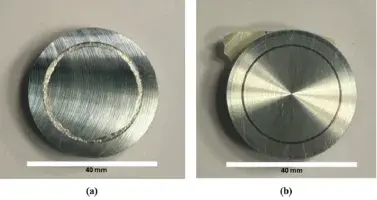
Thermo-rheological and tribological properties of low- and high-oleic vegetable oils as sustainable bio-based lubricants†
This learning object explores the thermo-rheological and tribological behavior of various vegetable oils—specifically low- and high-oleic soybean oil, high-oleic sunflower, safflower, and canola oils—as sustainable alternatives to petroleum-based lubricants in metal machining. The study evaluates key properties such as viscosity index, flow behavior index, flow activation energy, specific heat ...
Thermochemistry and Energy Use
This module focuses on thermochemistry, which is covered in either general chemistry I or general chemistry II depending on institutional preferences. The module consists of several activities.
Activity 1 consists of an initial orientation to energy systems: completed by students outside of class and followed by an an in-class activity where students calculate the energy required to prepare food ...
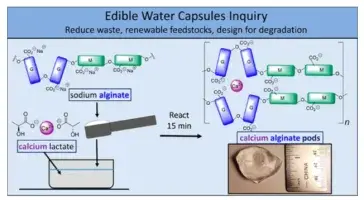
Thirst for a Solution: Alginate Biopolymer Experiments for the Middle and High School Classroom
Middle and and high school curricula is described based on the synthesis of biodegradable calcium alginate capsules prepared from food-safe chemicals. Green chemistry principles are shared through the use of renewable and degradable materials and the application to new innovations in the design of environmentally friendly alternatives to plastic water bottles.
Emma R. Corcoran, Cassandra Lydon ...
Tie sustainable industry into your chemistry topics
This resource provides activities and suggestions for incorporating UN Sustainable Development Goal 9 into the teaching of reaction kinetics, equilibrium, and catalysts.

Tie-Dyeing with Tannins and Iron
This laboratory experiment uses tannins from acorns and iron from rusted metal to color cotton fabrics. It explores renewable dyes, oxidation and reduction reactions, and the creation of organometallic coordination polymers from waste resources. It's suited for introductory and non-major students but can be extended into upper-level undergraduate courses as well.
It's well suited for the fall ...
Tools and techniques for solvent selection: green solvent selection guides
This review article overviews solvent selection guides and explains their role in helping to choose appropriate solvents as well as highlights their similarities and differences. Provides an overview of data from (and comparison between) solvent selection guides by GSK, Sanofi, Pfizer, ACS Green Chemistry Institute, and CHEM21.
Full citation: Byrne, F.P., Jin, S., Paggiola, G. et al. Tools and ...
Toward a More Holistic Framework for Solvent Selection
This published article describes the development of a comprehensive solvent selection tool and framework at AstraZeneca, as well as the significant changes and improvements over original solvent selection efforts at the company. Through consideration of chemical functionality, physical properties, regulatory concerns, and safety/health/environmental (SHE) impact, the new and improved tool allows ...
Toward the Greening of Our Minds: A New Special Topics Course
A special topics course on "Towards the Greening of Our minds" is offered every other spring at Washington College. This course is designed for science majors who have taken general and organic chemistry and are interested in the future of the planet. The ultimate goal of the class is for students to use green chemistry as a way to critically evaluate environmental policy. Over the course of the ...
Toxicology
This module is part of a collection of nine green chemistry teaching modules developed in the early 2000s by a team of faculty (Donna Narsavage-Heald, Trudy Dickneider, David Marx, Timothy Foley, Joan Wasilewski) led by Michael Cann at the University of Scranton and has been migrated to the GCTLC. The subjects of the modules are based on winners of the Green Chemistry Challenge Awards. The modules ...
ToxTutor: a self-paced tutorial to learn toxicology
ToxTutor is a self-paced online course that covers the basics of toxicology.
The 16 modules in the course cover topics including:
-Introduction to toxicology
-Dose and dose response
-Toxic effects and interactions
-Toxicity testing methods, risk assessment, exposure standards and guidelines
-Basic physiology and introduction to toxicokinetics
-Absorption, distribution, biotransformation and ...
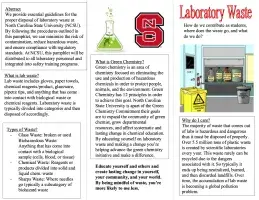
Trifold for lab waste education Part 1
We provide essential guidelines for the proper disposal of laboratory waste at North Carolina State University (NCSU). By following the procedures outlined in this pamphlet, we can minimize the risk of contamination, reduce hazardous waste, and ensure compliance with regulatory standards. At NCSU, this pamphlet will be distributed to all laboratory personnel and integrated into safety training ...
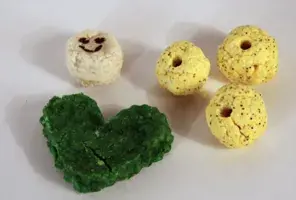
Turn Milk into Plastic!
"Plastic made from milk" —that certainly sounds like something made up. If you agree, you may be surprised to learn that in the early 20th century, milk was used to make many different plastic ornaments —including jewelry for Queen Mary of England! In this chemistry science project, you can figure out the best recipe to make your own milk plastic (usually called casein plastic) and use it to make ...

Turn Plants into Biofuel with the Power of Enzymes
Are biofuels the wave of the future? People often talk about these plant-derived fuels as a way to someday cut down on our dependency on non-renewable carbon-based fuels, like gasoline. Ethanol (a type of alcohol) is a common biofuel used today. In the United States, ethanol is a common biofuel additive to normal gasoline. In fact, some states mandate that when you fill up your gas tank, 10 ...
Understanding climate change as a process
This resource connects human activities to the impact they have on the environment. This activity focuses on the topic of climate change by exploring the chemistry behind climate change and its impact on the environment using a flow diagram.
Upcycling Waste Polycarbonate into N,N’-Diphenylethylurea: A Hands-On Experiment for Undergraduate Chemistry Laboratories
Full citation: Chowdhary, S., Kumar, N., Henry, N., Roussel, P., Demertzis, K., Singh, S., & Kumar, V. (2025). "Upcycling Waste Polycarbonate into N,N’-Diphenylethylurea: A Hands-On Experiment for Undergraduate Chemistry Laboratories." Journal of Chemical Education. https://doi.org/10.1021/acs.jchemed.4c01130.
The urgent challenge of climate change drives the need for sustainable and ...
Using AI & Machine Learning to Accelerate Sustainable Innovation
If we are to meet the demands of sustainability and climate change in the time needed, green chemistry advancements will have to happen faster than traditional methods of discovery can often make possible.
In this episode of Green Chem Essential, with host James Rea, Dr. Alexi Lapkin and his fellow researchers describe how they are trying to use the combined power of machine learning & ...
Using Green Chemistry to Create a More Sustainable Pharmaceutical Industry
The medicines we rely on may look tiny when we hold them in our hands, but the manufacturing processes that create those medicines happen at a very large scale. Anything that makes those processes cleaner, safer, and more efficient can have a tremendous impact on efforts to fight climate change and create a more sustainable future.
Hear how green chemistry is helping to make those changes ...
Using systems thinking to connect green principles and United Nations Sustainable Development Goals in a reaction stoichiometry module
The article discusses how chemistry fundamentals are taught using sustainable principles to address climate change. Green chemistry and the United Nations Sustainable Development Goals (SDGs) guide educators in creating resources that connect these principles with sustainability. Systems thinking is used to design relevant lectures, activities, and assessments. A week-long stoichiometry module is ...
Values Are More Than Statements: Connecting Actions to Values to Build Inclusive Cultures in Chemistry Research Groups
EmmaLee Pallai, Mikaila C. Hoffman, and Gabriela S. Schlau-Cohen (2024). "Values Are More Than Statements: Connecting Actions to Values to Build Inclusive Cultures in Chemistry Research Groups." Journal of Chemical Education Article ASAP DOI: 10.1021/acs.jchemed.4c00600
Abstract: A diverse scientific community is a strong scientific community. Innovation and progress require varied perspectives ...
Voices of Black Talent in Chemistry: Retention Strategies and Personal Success Stories
This article presents the issues and barriers to retention of black talent in the field of chemistry and offers solutions and personal insights from black students, faculty, staff, and industry scientists in the chemistry space.
Voices of Black Talent in Chemistry: Retention Strategies and Personal Success Stories
Thais Scott, Davina Adderley, Yasmin Ali, Michael Amanuel, Alexis Blake, Makalya ...
Water Depollution Control: A Gateway to Reaction Monitoring and Analytical Chemistry
This paper describes a four-hour experimental session focused on monitoring the degradation of an organic pollutant using a Fenton-like reaction. In this experiment, an aqueous solution of p-nitrophenol is treated with hydrogen peroxide and magnetite, with the reaction's progress tracked through UV–vis spectrophotometry and/or gas chromatography utilizing an internal standard. Undergraduate ...
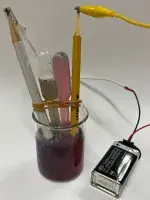
Water Electrolysis with Biobased/Low Hazard Indicators – Red Cabbage Juice or Pea Flower Tea
Electrolysis of water is carried out using biobased/low hazard indicators to help illustrate the reaction.
Key Chemistry References for this activity:
1) Skinner, J. F. “Red Cabbage and the Electrolysis of Water.” J Chem. Educ., 1981, 58, 1017. https://pubs.acs.org/doi/pdf/10.1021/ed058p1017.1
2) Hugerat, M.; Abu-Much, R.; Basheer, A.; Basheer, S. “Using Inexpensive to Free Materials to do ...
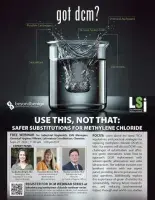
Webinar: "Use This Not That: Safer Substitutions for Methylene Chloride"
Two-hour webinar that took place on Friday, September 27th, 2024 and explored the latest TSCA regulations in the U.S. and practical strategies for replacing methylene chloride (DCM) in labs. Experts discussed DCM’s use, challenges of substitution, and effective green alternatives. Learn how to approach DCM replacement with solvent-specific alternatives and safer lab practices. The webinar included ...
What To Do About CO2?
In this interactive lesson and game-based activity, students investigate the role of carbon dioxide (CO₂) in climate change, ocean acidification, and human health. Through card-based simulations and guided discussion, students explore how CO₂ dissolves in water, lowers pH, and impacts natural systems. The activity then introduces carbon capture strategies—including biological, chemical, and ...
Women in chemistry
This resource offers activities and directions that emphasize the role of women in chemistry in alignment with the UN Sustainable Development Goals (SDG) focused on attaining gender equality and empowering women and girls.
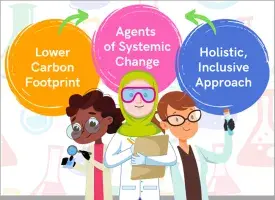
Women in Green Chemistry and Engineering: Agents of Change Toward the Achievement of a Sustainable Future
Both green and sustainable chemistry and engineering can broadly reach and interconnect different aspects of our society. To promote peace and protect our planet by 2030, the systemic change enabled by the holistic and inclusive perspective of green and sustainable chemistry and engineering is essential. Within this context, women and girls occupy a unique position: (1) The consequences of climate ...
Wood Ash Titration
The 12 Principles of Green Chemistry guide us to use catalysts to improve the energy and atom efficiency of reactions. The principles also guide us to use renewable feedstocks. In this experiment, we can see how waste from one process can be used productively in another. Specifically, biodiesel can be made from waste vegetable oil, a renewable feedstock that was traditionally discarded by the food ...
Writing the Principles: Let's Make Lemonade!
Green chemistry focuses on developing sustainable and environmentally friendly practices within the field of chemistry. An effective approach to introducing this concept is through the exploration of the 12 Principles of Green Chemistry, which serve as a guiding framework for creating safer, more efficient, and environmentally conscious chemical processes. By incorporating these principles into ...

You're Invited to Access a Community of Green Chemistry Experts
Whether you're new to the world of green chemistry education and research or a seasoned veteran, the Green Chemistry Teaching and Learning Community (GCTLC) offers a terrific chance to connect with others in the field and access a tremendous collection of valuable resources.
The mission of this online community portal is summed up by the four main content categories: Learn, Share, Connect, Grow ...