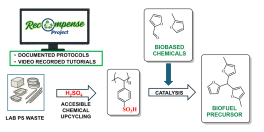
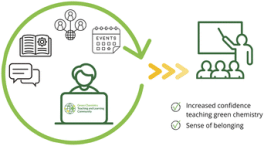
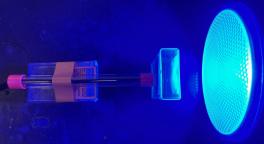
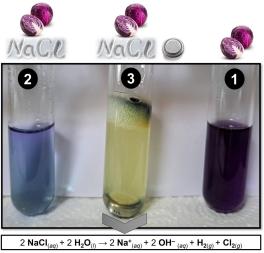
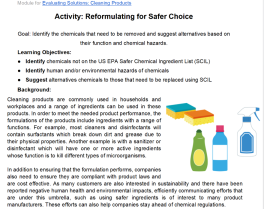
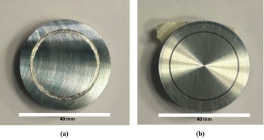
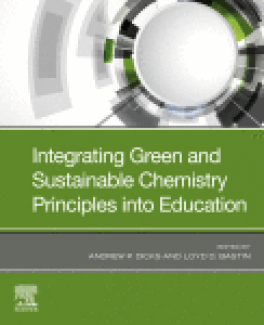
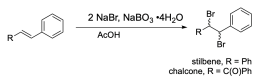
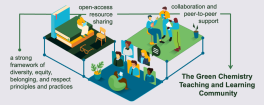
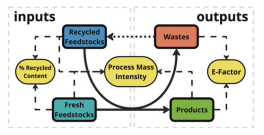
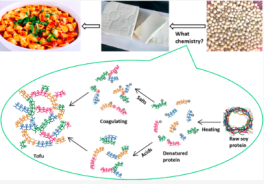
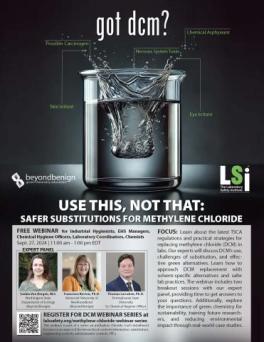
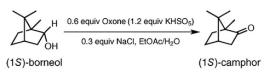
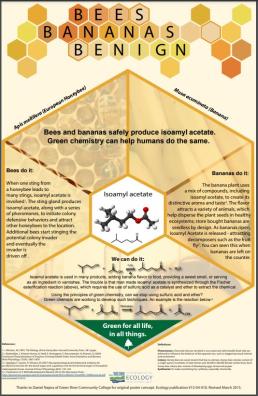
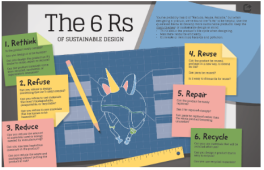
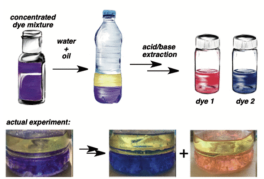
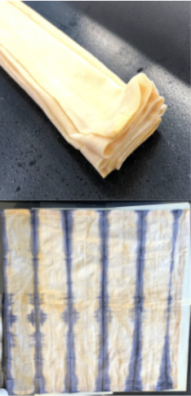
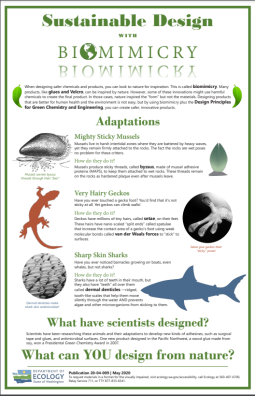
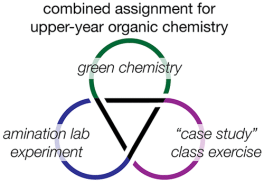
Learning Objects Summary Contributors NGSS Standards Audience Elementary SchoolMiddle SchoolHigh School (Secondary School)Introductory UndergraduateUpper/Advanced UndergraduateGraduate or Professional Training (e.g., Postdoctoral Fellows, Early-Career Professionals)Other Faculty Educators/TeachersEnvironmental Health & Safety (EH&S)Other Object Type Laboratory experimentLecture or course slides/notes (e.g., PPT, Prezi, PDF)Activities/Technology (e.g., in-class activities, online games, hands-on activities/manipulatives, outreach, virtual tools, etc.)Lesson summariesExam questions and answersAssessmentsCase studiesSyllabiSmall resource setsVideos (e.g., tutorials, presentations)Journal articlesBooksOther Green Chemistry Principles Waste PreventionAtom EconomyLess Hazardous Chemical SynthesesDesigning Safer ChemicalsSafer Solvents and AuxiliariesDesign for Energy EfficiencyUse of Renewable FeedstocksReduce DerivativesCatalysisDesign for DegradationReal-Time Pollution PreventionSafer Chemistry for Accident PreventionNot applicable Apply RECOMPENSE: A Student-Led Open Science Initiative for Sustainable Polystyrene Waste Upcycling in Academic Labs Toward Inclusive Green and Sustainable Chemistry Education: Case Studies with Blind and Deaf Students Evaluating Soy Lecithin as a Sustainable Emulsifier in Skincare Formulations Surveying user experiences in an inclusive online green chemistry education community of practice Reducing the production of waste in the synthesis of LAGEVRIO™ (molnupiravir), an antiviral treatment for COVID-19 The Chemetry eShuttleTM Process: Manufacturing ethylene dichloride with less energy and without a toxic intermediate Lifecycle and Sustainability: Enrichment Lesson Got Gas Ecological Footprint: Introduction to Green Math Real World Examples of Chemistry - The Flint Water Crisis Progesterone Synthesis Investigating Chemistry’s Potential Roles in the Life Cycle of Plastics – An Outreach Laboratory Activity for High School Students Greener Plastics: A Case Study to Address to Sustainability Issues around Single-Use Plastics Polymers from Soybeans: The transesterification of triglycerides What To Do About CO2? Ocean Plastics Green Glue Are Mushrooms the New Plastic?: Ecovative Design Challenge Advanced Biomimicry Matching Game Properties of Adhesives: A Sticky Situation: 04 Just Glue It! Properties of Adhesives: A Sticky Situation: 03 Battle of the Glues Properties of Adhesives: A Sticky Situation: 02 Testing Tape Properties of Adhesives: A Sticky Situation: 01 What Do We Learn From Animals? Desalination Design Challenge: 06 Desalination Design Desalination Design Challenge: 05 Salty Solutions Desalination Design Challenge: 04 Fresh Filters: Get the Mud Out Desalination Design Challenge: 03 Focus on Filtering Desalination Design Challenge: 02 How Do Animals Conserve Water? Desalination Design Challenge: 01 Water, Water Everywhere Secrets of Sharks’ Skin: 05 Data and Denticles Secrets of Sharks’ Skin: 04 Prototype Testing: Binder Clip Bacteria Secrets of Sharks’ Skin: 03 Shape or Size? Secrets of Sharks’ Skin: 02 Geometry in Our World Secrets of Sharks’ Skin: 01 Grammar Sharks Blue Mussels: Expert Sustainable Engineers: 01 Exploring Sustainable Innovations Blue Mussels: Expert Sustainable Engineers: 04 Survival of the Stickiness Blue Mussels: Expert Sustainable Engineers: 03 Adaptation Investigation Blue Mussels: Expert Sustainable Engineers: 02 Stuck on Sustainability Animal Adaptations and Engineering Design: 03 Animal Homes Animal Adaptations and Engineering Design: 02 ABC’s of Biomimicry Lab: Lettuce Seed Assay Lab: Global Warming and Greenhouse Gas Experiment Green Chemistry University Course: Webinar Chemistry Education for a Sustainable Future Problem-Based Learning in Sustainable Chemistry: A Student Startup Model with PET as a Case Study. Lab Waste Audit Toolkit: A step-by-step process to reduce plastic waste in the lab Modeling Solar Disinfection with Turmeric and an LED Lamp ToxTutor: a self-paced tutorial to learn toxicology Case Study for Evaluating Synthetic Routes Using Engineering Practices Evaluating Solutions: Cleaning and Disinfecting Products Green Chemistry and the Ten Commandments of Sustainability Introduction to Green and Sustainable Chemistry Syllabus An Easy-to-Use Template for Creating Green Chemistry Case Studies for Teaching A Practical and Safe Demonstration of Brine Electrolysis Using a Button Cell Reformulating for Safer Choice: Cleaning and Disinfecting Products Module III. Sustainable Adhesives from Soybean Oil: A Green Chemistry Laboratory Experiment Module IIB. Exploring Techno-Economic Assessments and Life Cycle Assessments: Environmental versus Economic Evaluations of Soy-based Processes and Products Module IIA. Innovations in Soy Chemistry: Industrial Case Studies Module I. Introduction to Soybean History, Cultivation, and Chemistry 00 Soy Chemistry Curriculum Overview - Instructor Notes Enzyme-based processing of soybean carbohydrate: Recent developments and future prospects Synthesis and Free Radical Copolymerization of a Vinyl Monomer from Soybean Oil Evaluation of a high oleic soybean oil variety in lubricant and biodiesel applications Rheological Properties of Soybean Oil with Nano Additives: A Comprehensive Analysis A highly reactive soybean oil-based superhydrophobic polyurethane film with longlasting antifouling and abrasion resistance Science Shorts! Bell Ringer Activities for K-12 Focused on Sustainability and Green Chemistry Integrating Artificial Intelligence (AI) Chatbots and Green Chemistry Principles in the Synthesis of Cyclohexene Colorful and Creative Chemistry: Making Simple Sustainable Paints with Natural Pigments and Binders Solvent Selection for SN1 and SN2 Reactions in Green and Sustainable Chemistry Pericyclic Reactions Orange is the Color of Warning Problem Solve Your School-Using engineering design process rxnSMILES4AtomEco: Teaching Atom Economy with Reaction SMILES Enhancing chemistry understanding and attitudes through an outreach education program on circular plastic economy: a case study with Thai twelfth-grade students Student participation in a coastal water quality citizen science project and its contribution to the conceptual and procedural learning of chemistry Chemical Substitution and Alternatives Assessment Module Ethers and sulfides Case study: Microplastics in cosmetics Testing Greener Solvents for Extraction of PCBs in Water Samples Thermo-rheological and tribological properties of low- and high-oleic vegetable oils as sustainable bio-based lubricants† Effects of the use of soybean oil as cutting fluid on the surface finish for turning operations Preparation and Properties of Lubricant Basestocks from Epoxidized Soybean Oil and 2-Ethylhexanol Amines in Pharmaceutical Synthesis A new formaldehyde-free wood adhesive from renewable materials A new method of making particleboard with a formaldehyde-free soy-based adhesive Investigation of poly (glycidyl methacrylate-co-styrene) as a curing agent for soy-based wood adhesives Pressure-Sensitive Adhesives Based on Epoxidized Soybean Oil and Dicarboxylic Acids Green Chemistry: Principles and Case Studies Exploration of the complementary properties of biobased epoxies derived from rosin diacid and dimer fatty acid for balanced performance Integrating Green and Sustainable Chemistry Principles into Education Promoting political and civic engagement in a nonmajor sustainable chemistry course Involving Students in the Greening of the Organic Laboratory Curriculum Carbonyls Redox: Aldehydes and Ketones Make a PET Jellyfish from a Water Bottle Alcohols Thermochemistry and Energy Use Green chemistry, sustainability, and environmental impact Stoichiometry: Combustion, Fuels, and Green Chemistry Metrics Chemical Kinetics QUÍMICA VERDE PARA EDUCAÇÃO BÁSICA PARA UMA FORMAÇÃO MAIS SUSTENTÁVEL The Need for and Evolution of a Global Community of Practice in Green Chemistry Education Styrene-Free Soybean Oil Thermoset Composites Reinforced by Hybrid Fibers from Recycled and Natural Resources Scalable manufacturing and reprocessing of vitrimerized flexible polyurethane foam (PUF) based on commercial soy polyols One-step acrylation of soybean oil (SO) for the preparation of SO-based macromonomers Modification of epoxidized soybean oil for lubricant formulations with improved oxidative stability and low pour point Frictional analysis on engine lubricant dilution by coconut oil and soybean oil derived biodiesel Exploring Wavelength: A Quantitative and Qualitative Analysis of LEDs Safer Stuff: Green Chemistry Gets Down to Business Alternatives to Dichloromethane (DCM) for Teaching Laboratories A Comparative Study of Diesel Oil and Soybean Oil as Oil-Based Drilling Mud Soybean carbohydrate as fermentation feedstock for production of biofuels and value-added chemicals Comparison between Sunflower Oil and Soybean Oil as Gear Lubricant Is your lab safety training - safe? Hydrocarbons; Fuels and Feedstocks Hydrocarbons and Functional Groups: Connecting Structure to Application in Transportation Fuels Structure Determination in the Green Undergraduate Laboratory Upcycling Waste Polycarbonate into N,N’-Diphenylethylurea: A Hands-On Experiment for Undergraduate Chemistry Laboratories Solve et Coagula: Exploring Alchemy and Sustainability with Gold Pre-Lab- Understanding Chemical Hazard and Laboratory- Formula of a Hydrate Improving Lab Safety and Reducing Chemical Hazards in the Laboratory Classroom Stereochemistry: Introduction to Chirality Introduction to Systems Thinking in Chemistry Bioleaching of Rare Earth Fluorescent Lamp Phosphors Using Kombucha GrowNextGen Curriculum: Soybeans as a Chemical Feedstock Ethics of Chemistry: The Design, Delivery, and Assessment of a Third-Year Course Encyclopedia of Green Chemistry Soy-Based Chemicals and Materials: Growing the Value Chain Ideal Gases-The Anthropogenic N2 cycle: Gas Phase Reactions Essential to Food and Life Greener bromination of alkenes using sodium bromide and sodium perborate 3D-Printable Biobased Eutectogels Based on Soybean Oil and Natural Deep Eutectic Solvents for Underwater EMG Recording The journey towards an inclusive green chemistry education community of practice by prioritizing diversity, equity, belonging, and respect for an open-access online platform Challenges and Opportunities for Implementing Green Chemistry in Nigerian Universities: Educational and Policy Perspectives Lecture Activity: Hydrophobic Effects and Forever Chemicals Protein N‐Glycans: Incorporating Glycochemistry into the Undergraduate Laboratory Curriculum Identification of Fatty Acids, Phospholipids, and Their Oxidation Products Using Matrix-Assisted Laser Desorption Ionization Mass Spectrometry and Electrospray Ionization Mass Spectrometry Evaluating Sustainability: Soap versus Biodiesel Production from Plant Oils Reprocessable Networks from Vegetable Oils, Salts, and Food Acids: A Green Polymer Outreach Demonstration A Novel General Chemistry Experiment for Freshmen: Transgenic Soybean Detection Based on Microfluidic Molecular Fluorescence Spectroscopy Analysis Rudolph Diesel Meets the Soybean: “Greasing” the Wheels of Chemical Education Explore Material Efficiency and Sustainability with Green Chemistry Metrics From Soybeans to Tofu: The Underlying Chemistry Cooperative Organic Chemistry Laboratory Green Chemistry for Sustainability (GCS) Publications and Reports CHE 1110 Chemistry, Biochemistry, and Society UNSDG Presentation CHE 1110 Chemistry, Biochemistry, and Society Outreach Project A guide to using the Greener Alternatives Evaluation Matrix (DOZN™ 2.0) in Academic Settings for Safer Labs Reações em cascata enzimática, quimioenzimática e fotoenzimática: perspectivas para uma síntese orgânica mais sustentável Soybean Oil: Powering a High School Investigation of Biodiesel Teaching Green Chemistry with Epoxidized Soybean Oil Green Route: an educational and potentially inclusive game for teaching Green Chemistry to deaf students. Webinar: "Use This Not That: Safer Substitutions for Methylene Chloride" Green Chemistry and the Electrochemical Series Analyzing Sports Drinks with Beer's Law in a Green Chemistry Lab Advancing sustainable chemistry education: Insights from real-world case studies Primer for the Guide - Green Chemistry: Principles and Lab Practices A Guide To Green Chemistry Experiments for Undergraduate Organic Chemistry Labs Mechanochemistry with Anthocyanin Indicators Using Solid Acids and Bases Trifold for lab waste education Part 1 Greenhouse Gases and Unit Conversions Water Depollution Control: A Gateway to Reaction Monitoring and Analytical Chemistry Iodination of vanillin and subsequent Suzuki-Miyaura coupling: two-step synthetic sequence teaching green chemistry principles Extraction of dyes contained in glow sticks using liquid CO2 A greener organic chemistry experiment: reduction of citronellal to citronellol using poly(methylhydro)siloxane The safer chemical design game. Gamification of green chemistry and safer chemical design concepts for high school and undergraduate students Putting the squeeze on imine synthesis: citrus juice as a reaction medium in the introductory organic laboratory The Adoption of Green Chemistry in Brazilian Higher Education Using systems thinking to connect green principles and United Nations Sustainable Development Goals in a reaction stoichiometry module Synthesis of substituted N-phenylmaleimides and use in a Diels–Alder reaction: a green multi-step synthesis for an undergraduate organic chemistry laboratory Greener Isolation of Eugenol from Cloves Using Steam Distillation and Ethyl Acetate Exploring Sustainable Practices in Metal Plating: The Drive for Greener Innovations - A case study Replacement of Less-Preferred Dipolar Aprotic and Ethereal Solvents in Synthetic Organic Chemistry with More Sustainable Alternatives Chlorinated Solvents: Their Advantages, Disadvantages, and Alternatives in Organic and Medicinal Chemistry Toward a More Holistic Framework for Solvent Selection Beyond Benign Greener Solvent Guide Substitution of carcinogenic solvent dichloromethane for the extraction of volatile compounds in a fat-free model food system Octanol–Water Partition Coefficient Measurement by a Simple 1H NMR Method A survey of solvent selection guides The Olin Chemical Superfund Site Case Study Tools and techniques for solvent selection: green solvent selection guides A convenient guide to help select replacement solvents for dichloromethane in chromatography CHEM21 selection guide of classical- and less classical-solvents Alternative Solvents for Green Chemistry A Guided Inquiry Laboratory Activity to Explore Reactivity of Carbonyl Compounds Make It and Break It: Bioplastics from Plant Starch with Incorporation of Engineering Principles Organic Chemistry II Lesson Plans Green Chemistry Starter Pack: Safer Labs in the Classroom The relevance of sustainable laboratory practices Green chemistry tools to influence a medicinal chemistry and research chemistry based organisation Fact Sheet: Solvent Alternatives Teaching green chemistry, sustainability ethics, and toxicity using nail polish removers Microwave Synthesis of a Prominent LED Phosphor for School Students: Chemistry’s Contribution to Sustainable Lighting Integrating Green and Sustainable Chemistry into Undergraduate Teaching Laboratories: Closing and Assessing the Loop on the Basis of a Citrus Biorefinery Approach for the Biocircular Economy in Brazil Integrating Social Justice into the Chemistry Curriculum: Setting the Ethical Foundation for Future Scientists Green Goggles: Designing and Teaching a General Chemistry Course to Nonmajors Using a Green Chemistry Approach Systems thinking approaches for international green chemistry education Roles of Systems Thinking within Green Chemistry Education: Reflections from Identified Challenges in a Disadvantaged Context A Green and Efficient Cyclization of Citronellal into Isopulegol: A Guided-Inquiry Organic Chemistry Laboratory Experiment Thirst for a Solution: Alginate Biopolymer Experiments for the Middle and High School Classroom Political Engagement in Organic Chemistry Organic Nomenclature and Safety of Chemical Products Values Are More Than Statements: Connecting Actions to Values to Build Inclusive Cultures in Chemistry Research Groups Oxidation of Borneol to Camphor Using Oxone and Catalytic Sodium Chloride: A Green Experiment for the Undergraduate Organic Chemistry Laboratory ChemFORWARD Module Unit 2: Avoiding Regrettable Substitutions, Natural Is Not Always Safer ChemFORWARD Module Unit 1: Introduction to ChemFORWARD, and Use of ChemFORWARD to Find Safer Chemical Alternatives ChemFORWARD Module Unit 0: Background materials ChemFORWARD Module Overview Voices of Black Talent in Chemistry: Retention Strategies and Personal Success Stories Juneteenth in STEMM and the barriers to equitable science Cinnamon Oil: An Alternate and Inexpensive Resource for Green Chemistry Experiments in Organic Chemistry Laboratory A Green Nucleophilic Aromatic Substitution Reaction Dyeing to Degrade: A Bioplastics Experiment for the College and High School Classroom Dissolved Substances in Tap Water and Seawater Pollution in your Home Greener synthesis of medicinally relevant amides Separating Salts from Seawater The Reaction of Carbon Dioxide with Water Making plastic from potato starch The Massive Problem of Microplastics E10 petrol and climate change | 14–16 years Organic chemists: contributing to food production | 16–18 years Re-casting traditional organic experiments into green guided-inquiry based experiments: student perceptions Green Chemistry in Science Policy Infographic and Discussion on Application to Organic Chemistry I Lecture Interdisciplinary Gamified Teaching of Critical Metals Incorporating Sustainability and Life Cycle Assessment into First-Year Inorganic Chemistry Major Laboratories Novel Interdisciplinary Systems-Based Approach to Teaching Sustainability in Plastics Animal Adaptations and Engineering Design: Lesson 04: Building with Biomimicry Animal Adaptations and Engineering Design: 01 Form and Function Animal Adaptations and Engineering Design Unit Overview Key Elements of Green Chemistry Integrating Simple Environmental Impact-Based Metrics into the Undergraduate Curriculum Fermentation Project: Exploring Ethanol Production Pilot Project: Chemical Waste Minimization in the Educational Laboratory: Final Report Sustainable STEM: Surefire Sharklet Lab A promise to a sustainable future: 10 years of the Green Chemistry Commitment at Beyond Benign Sustainable STEM: Polymer Properties Incorporating Diversity, Equity and Inclusion Awareness and Knowledge in a First-Semester Organic Chemistry Classroom Organic Chemistry General Chemistry The Green Soap Girl and the Itchy Allergy Sustainable STEM: Fabulous Fabrics Sustainable STEM Lesson 6: Presenting a Sustainable Solution Sustainable STEM Lesson 5: Testing the Cell Phone Cases Sustainable STEM Lesson 4: Making Mushroom Material Sustainable STEM Lesson 3: Life Cycle Sustainable STEM Lesson 2: Using Engineering Design to Make a Prototype Sustainable STEM Lesson 1: Beginning an Investigation by Gathering Evidence Sustainable STEM Overview An Inexpensive Aquarium Pump Water Recirculator for the Teaching Laboratory Equality, education and science "We Are Going To Be Rebels Together" ~ A Look Inside the Univ. of Toronto's Green Chemistry Initiative Industrial Chemistry Polymer Chemistry Advanced Organic Chemistry Toxicology Environmental Chemistry Biochemistry Inorganic Chemistry Students Learn Green Chemistry by Taking On Real-World Sustainability Challenges How Green Chemistry Can Help Advance Environmental Justice Using Green Chemistry to Create a More Sustainable Pharmaceutical Industry You're Invited to Access a Community of Green Chemistry Experts Using AI & Machine Learning to Accelerate Sustainable Innovation An Innovation Studio Leans into the Power of Green Chemistry The Student Who Inspired the Professor Who Inspired the World Finding New Ways to Store & Transport Hydrogen in Support of Renewable Energy "It's Our Future to Decide" - How a Student & Two Professors Got Green Chemistry into the Curriculum at the Univ. of Colorado Principle 12: Inherently Safer Chemistry for Accident Prevention Principle 11: Real-Time Analysis for Pollution Prevention Principle 10: Design for Degradation Principle 9: Catalysis Principle 8: Reduce Derivatives Social and Environmental Justice in the Chemistry Classroom Principle 7: Use of Renewable Feedstocks Green Chemistry 101 - Introduction Green Chemistry JV InventTeams Activity Guide Assessment of Student Knowledge of Green Chemistry Principles Case study assessment using biobased 5-hydroxymethylfurfural to teach redox reactions in undergraduate organic courses Principle 6: Design for Energy Efficiency Principle 5: Safer Solvents and Auxiliaries Principle 4: Design Safer Chemicals and Products Learning Green Chemistry Principles by Comparing Three Synthetic Routes to a Copper-NHC (NHC = N-heterocyclic carbene) Complex Infographics profiling green chemists Green Chemistry: Sustainability at the Atom Scale. Frontiers for Young Minds Article Recycling plastic bottles Principle 3: Design less hazardous chemical syntheses Principle 2: Maximize atom economy Tackle poverty in chemistry lessons Principle 1 - Prevent Waste Designing 3 experiments from Vinegar and an Antacid Understanding climate change as a process Add ocean acidification to your existing lessons Careers in Green Chemistry and Sustainable Design: Video Series for Secondary Classrooms and Activity Guide Careers Highlighting Green Chemistry and Sustainable Design in Chemical or Product Manufacturing Companies Plastics and Sustainable Building - E-learning course Climate Change Chemistry E-factor Chemical Hazard Awareness Module Bees, Bananas, Benign - Green Chemistry Poster Biomimicry Matching Game Greening the Clock Reaction: Rates of Reaction Lab Synthesis and Analysis of Biodiesel Unit A Green(er) Redox Reaction Essential Oil Extraction using Liquid CO2 Exothermic and Endothermic Reactions A guidebook for sustainability in laboratories Dye-Sensitized Solar Cell A Mole of Rice How Ecovative are You?: Mushroom Materials Lab Recycling Polylactic Acid Wood Ash Titration Acids, Bases, and pH The pH scale and the chemistry of ocean acidification Antibacterial properties of the halogens Tie sustainable industry into your chemistry topics Slot sustainable energy into your teaching Modeling Unit Cells and Layer Sequences of Solar Cell Materials using Dimpled Packaging The 6 "R"s of Sustainable Design Synthesis of Naphthyl Butyl Ether Fossil fuels and global carbon emissions Chemists' role in the fight against disease Give context to air pollution, materials and nanochemistry Separation of Food Colorings via Liquid–Liquid Extraction: An At-Home Organic Chemistry Lab Justice and injustice in chemistry: aspirin and other drugs Tie-Dyeing with Tannins and Iron Sustainable Design with Biomimicry Poster Lemonade Lab - Introduction to Green Chemistry Principles Green Chemistry Teacher Professional Development in New York State High Schools: A Model for Advancing Green Chemistry Fueling the Future Add sustainable management of water to your existing lessons Effects of a CURE Laboratory Module on General Chemistry Students’ Perceptions of Scientific Research, Green Chemistry, and Self-Efficacy Women in chemistry Monitoring local pollutant levels Comparing Industrial Amination Reactions in a Combined Class and Laboratory Green Chemistry Assignment So you think you want to teach Green Chemistry? Women in Green Chemistry and Engineering: Agents of Change Toward the Achievement of a Sustainable Future Approaches to Incorporating Green Chemistry and Safety into Laboratory Culture Writing the Principles: Let's Make Lemonade! Intellectual Ecology by Dr. John Warner 12 Principles of Green Chemistry A Greener Chemiluminescence Demonstration Solvent-Free Wittig Reaction: A Green Organic Chemistry Laboratory Experiment Green Chemistry Laboratory: Benign Synthesis of 4,6-Diphenyl[2,2']bipyridine via Sequential Solventless Aldol and Michael Addition Reactions A Greener Approach for Measuring Colligative Properties Determination of the Formula of a Hydrate: A Greener Alternative The Synthesis of N-Benzyl-2-azanorbornene via Aqueous Hetero Diels–Alder Reaction. An Undergraduate Project in Organic Synthesis and Structural Analysis The Discovery-Oriented Approach to Organic Chemistry. 7. Rearrangement of trans-Stilbene Oxide with Bismuth Trifluoromethanesulfonate and Other Metal Triflates. A Microscale Green Organic Chemistry Laboratory Experiment Some Exercises Reflecting Green Chemistry Concepts A Green Polymerization of Aspartic Acid for the Undergraduate Organic Laboratory Cocrystal Controlled Solid-State Synthesis. A Green Chemistry Experiment for Undergraduate Organic Chemistry Comparative Methylation of 1,8-Dihydroxy-9,10-anthraquinone: Chemoselectivity in the Organic Chemistry Laboratory A Green, Guided-Inquiry Based Electrophilic Aromatic Substitution for the Organic Chemistry Laboratory "New" Compounds from Old Plastics: Recycling PET Plastics via Depolymerization. An Activity for the Undergraduate Organic Lab Mannich Reactions in Room Temperature Ionic Liquids (RTILs): An Advanced Undergraduate Project of Green Chemistry and Structural Elucidation Microwave-Assisted Heterocyclic Chemistry for Undergraduate Organic Laboratory Developing and Disseminating NOP: An Online, Open-Access, Organic Chemistry Teaching Resource To Integrate Sustainability Concepts in the Laboratory Enantioselective Reduction by Crude Plant Parts: Reduction of Benzofuran-2-yl Methyl Ketone with Carrot (Daucus carota) Bits A Green Alternative to Aluminum Chloride Alkylation of Xylene Solvent-Free Synthesis of Chalcones Alkene Isomerization Using a Solid Acid as Activator and Support for a Homogeneous Catalyst Chiral Compounds and Green Chemistry in Undergraduate Organic Laboratories: Reduction of a Ketone by Sodium Borohydride and Baker's Yeast An Asymptotic Approach to the Development of a Green Organic Chemistry Laboratory Aqueous-Phase Palladium-Catalyzed Coupling. A Green Chemistry Laboratory Experiment Determination of the Heat of Combustion of Biodiesel Using Bomb Calorimetry. A Multidisciplinary Undergraduate Chemistry Experiment A Solvent-Free Baeyer–Villiger Lactonization for the Undergraduate Organic Laboratory: Synthesis of γ-t-Butyl-ε-caprolactone Environmentally Responsible Redox Chemistry: An Example of Convenient Oxidation Methodology without Chromium Waste News from Online: Renewable Resources Reductive Amination: A Remarkable Experiment for the Organic Laboratory Greening Wittig Reactions: Solvent-Free Synthesis of Ethyl trans-Cinnamate and trans-3- (9-Anthryl)-2-Propenoic Acid Ethyl Ester Greener Alternative to Qualitative Analysis for Cations without H2S and Other Sulfur-Containing Compounds Microwave-Assisted Organic Synthesis in the Organic Teaching Lab: A Simple, Greener Wittig Reaction "Greening Up" the Suzuki Reaction Oxidation of Aromatic Aldehydes Using Oxone Bringing State-of-the-Art, Applied, Novel, Green Chemistry to the Classroom by Employing the Presidential Green Chemistry Challenge Awards Toward the Greening of Our Minds: A New Special Topics Course A Microscale Heck Reaction In Water Patterning Self-Assembled Monolayers on Gold. Green Materials Chemistry in the Teaching Laboratory Micelle-Mediated Extraction of Heavy Metals from Environmental Samples: An Environmental Green Chemistry Laboratory Experiment Greening the Blue Bottle One-Pot Synthesis of 7-Hydroxy-3-carboxycoumarin in Water Organic-Solvent-Free Phase-Transfer Oxidation of Alcohols Using Hydrogen Peroxide Qualitative & Quantitative Gas Stoichiometry and Determination of an Unknown Alkali Carbonate GREEN CHEMISTRY AND SUSTAINABLE SCIENCE: A Green Approach to Sustainable STEM in K-12 - Chapter 5: Curriculum Unit GREEN CHEMISTRY AND SUSTAINABLE SCIENCE: A Green Approach to Sustainable STEM in K-12 - Chapter 4: Chemical Reactions GREEN CHEMISTRY AND SUSTAINABLE SCIENCE: A Green Approach to Sustainable STEM in K-12 - Chapter 3: Structure of Atoms and Molecules Green Chemistry and Toxicology Moments - slide set part A GREEN CHEMISTRY AND SUSTAINABLE SCIENCE: A Green Approach to Sustainable STEM in K-12 - Chapter 2: Human and Environmental Impacts GREEN CHEMISTRY AND SUSTAINABLE SCIENCE: A Green Approach to Sustainable STEM in K-12 - Chapter 1: Welcome to Green Chemistry Education New York State (NYS) Regents Green Chemistry Guide Can Biodegradable Materials Replace Plastic as Protective Food Packaging? From Trash to Gas: Biomass Energy Go Green by Growing Green: How to Extract Energy from Grass Grow Vegan Kombucha Leather How Eco-Friendly is Your Sunscreen? Investigate the Kinetics of the Color Changing Iodine Clock Reaction Make Sustainable Fabrics from Seaweed Testing Sunscreen Effectiveness and Water Solubility Turn Plants into Biofuel with the Power of Enzymes The Cold Wash Challenge: Testing How Well Enzymes Work in Laundry Detergents Empirical Formula Chemical or Physical Change? Equilibrium/Le Chatelier’s Principle Turn Milk into Plastic! STEMify Your Classroom Supply List USDA BioPreferred Standards Context Lesson Plan Finding the Molar Mass Difference Between Carbon Dioxide and Air Calorimetry Preparation and Testing of Buffers Polymers and Green Chemistry Stoichiometry Challenge Water Electrolysis with Biobased/Low Hazard Indicators – Red Cabbage Juice or Pea Flower Tea Stoichiometry: Reaction of Iron with Copper(II) Sulfate Iron (Fe) in Vitamins Catalyzing the Development of Self-Efficacy and Science Identity: A Green Organic Chemistry CURE Reactions Lab Sustainable Chemistry Definition Green Chemistry University Course: Lecture 18 - Exam 2 Green Chemistry University Course: Lecture 17 - Working Without Solvents Environmental Activities for the Classroom: Product Life-Cycle Analysis Green Chemistry University Course: Lecture 27 – Exam 3: Final Exam Green Chemistry University Course: Lecture 25 and 26: Safe Chemical Design Game Green Chemistry University Course: Lecture 24 – Designing Future Products with Reduced Toxicity Organometallic Nickel(II) Phosphine Complexes for Suzuki-Miyaura Cross-Coupling; A Greener Alternative? Green Chemistry University Course: Lecture 23 – Molecular Toxicology Green Chemistry University Course: Lecture 22 – Chemical Exposure and Dosage Green Chemistry University Course: Lecture 21 – Introduction to Toxicology Green Chemistry University Course: Lecture 20 – Green Analytical Chemistry Green Chemistry University Course: Lecture 19: Green Chemistry and Energy Green Chemistry University Course: Lecture 16 – Solvents: Understanding Their Role Green Chemistry University Course: Lecture 15 – Catalysis Green Chemistry University Course: Lecture 14 – Designing for Recycling and Degradation Green Chemistry University Course: Lecture 13 – Real-World Cases in Green Chemistry A greener tetraphenylporphyrin synthesis and metallation: an undergraduate teaching experiment The Synthesis of Zinc Copper Indium Sulfide Quantum Dots Sustainable Preparation of an Earth-abundant Metal Acetylacetonate Complex 12 - Case Studies, ChemToxTidbits, “Grab Bag” Folder (Toxicology for Chemists - Module 12) 11 - Structure-Activity Relationships (Toxicology for Chemists - Module 11) 10 - Predictive Toxicology (Toxicology for Chemists - Module 10) 09 - Ecotoxicology (Toxicology for Chemists - Module 9) 08 - Environmental Toxicology (Toxicology for Chemists - Module 8) 07 - Environmental Fate, Persistence, and Biodegradation (Toxicology for Chemists - Module 7) 06 - Toxicity of Metals (Toxicology for Chemists - Module 6) 04 - Reaction Mechanisms (Toxicology for Chemists - Module 4) 03 - Toxicokinetics and Toxicodynamics (Toxicology for Chemists - Module 3) 02 - Understanding Hazard and Risk (Toxicology for Chemists - Module 2) 01 - History and Principles of Toxicology - (Toxicology for Chemists Curriculum - Module 1) Green Chemistry University Course: Lecture 12 – Renewable Feedstocks for Energy Green Chemistry University Course: Lecture 11 – Renewable Feedstocks Green Chemistry University Course: Lecture 10 – Life Cycle Assessment Green Chemistry University Course: Lecture 09 – Sustainability Green Chemistry University Course: Lecture 08 – Exam 1 Green Chemistry University Course: Lecture 05 - The Molecule Green Chemistry University Course: Lecture 07 - Limiting Reagent, Yield, and Atom Economy Green Chemistry University Course: Lecture 06 – Stoichiometry and Reactions Green Chemistry University Course: Lecture 04 – It All Starts at the Beginning Green Chemistry University Course: Lecture 03 – 12 Principles of Green Chemistry Green Chemistry University Course: Lecture 02 - Green Chemistry: Reimagining Chemistry Green Chemistry University Course: Lecture 01 - Course Introduction and Accidents and Their Unintentional Consequences Plate to Planet Extension - Strawberry DNA Extraction Plate to Planet Extension - Elephant Toothpaste Plate to Planet - Lesson 4 Plate to Planet - Lesson 3 Plate to Planet - Lesson 2 Plate to Planet - Lesson 1 Sustainable Invention: An Exploration of Bioplastics - Module 4 Sustainable Invention: An Exploration of Bioplastics - Module 3 Sustainable Invention: An Exploration of Bioplastics - Module 1 Green Chemistry University Course: 00 - Syllabus Sustainable Invention: An Exploration of Bioplastics - Module 2